The Strength War Rarely Names
War is usually discussed through the language of strategy and statecraft: troop movements, weapons systems and geopolitical risk. Those conversations matter, as they shape the course of nations.
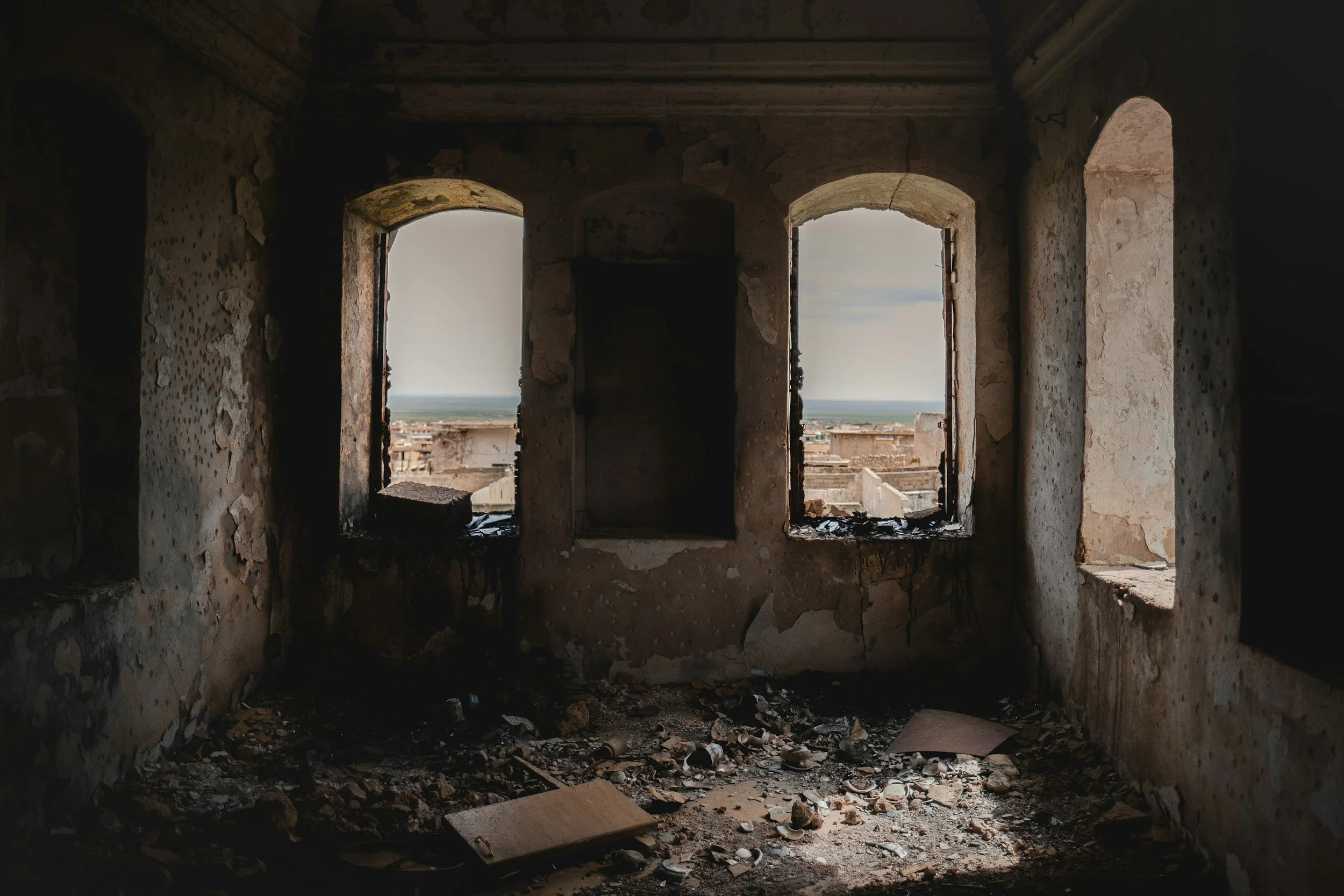
But another landscape emerges whenever war begins—one that rarely appears in briefings or military analysis.Long before its consequences appear on a battlefield, war reshapes the rhythms of ordinary life and the relationships that hold communities together.
“War does not simply alter the map of the world. It alters the emotional terrain of everyday life.”
Political science scholars have long noted that war depends not only on soldiers but on networks of invisible labor that allow societies to function under strain. Much of that labor unfolds inside homes and communities, where the work of maintaining stability quietly continues even as the wider world grows uncertain. These unseen forms of support are not peripheral to war—they are part of the infrastructure that makes it possible.
Across history, women have often carried a disproportionate share of that quieter work. Mothers, sisters, daughters, wives and friends frequently become the stabilizing forces within households navigating uncertainty. They keep daily life moving, absorbing the ambient anxiety of the moment while learning to live with pride and worry braided tightly together.
History rarely pauses to acknowledge this form of labor and care, yet it has always been there. Steady, persistent and essential.
As American service members deploy to the Middle East, many at home find themselves navigating a tired terrain: loving someone who has stepped into danger while trying to remain steady for everyone else who depends on them.
What emerges in these moments is not fragility. It is a very old form of strength.
There Are No Unwounded
The Argentine writer Leopoldo Marechal captures this reality with striking clarity, observing that “in war there are no unwounded.”
The line reads like philosophy, but functions as a diagnosis. War is never confined to battlefields.
Soldiers carry the visible risks of conflict. But those who love them carry another form of weight—the long tension of waiting, the quiet recalibration of hope and fear. Psychologist Pauline Boss describes this experience as “ambiguous loss,” a form of grief that arises when someone is physically absent but emotionally present in the lives of those who love them.
In this sense, war produces what might be called a distributed wound. The injuries are not only physical but also emotional, relational and civic. Communities feel them in subtle ways. Families reorganize themselves around absence. The ordinary rhythms of life adjust as best they can to accommodate uncertainty.
Yet within that shared vulnerability, something remarkable emerges. Societies endure not only through military strength but through the quiet persistence of everyday life.
How War Enters a Human Life
If Marechal helps us see how war wounds societies, fearless war correspondent Martha Gellhorn takes us to the micro in reminding us how those wounds are actually felt: “War happens to people one at a time.”
Even when history records conflict through the language of armies and nations, the lived experience of war unfolds in quiet, personal moments, like a parent watching their child pack a bag for a place that did not exist in their imagination just months before.
For many women—mothers especially—that moment asks the heart to hold two truths at once: pride in courage and fear for safety. Love does not simplify those emotions. It multiplies them.
Cultural expectations often push women toward emotional simplicity—to be purely proud, purely strong, purely certain. But war rarely allows such simplistic clarity; instead, it asks people to hold complexity with grace while under fire.
Recognizing that emotional weight does not weaken our respect for those who serve. If anything, it reveals how much their service asks of everyone who loves them; a truth that should never be forgotten by those who hold the power to send our sons and daughters into war.
Small Ways to Stay Steady
To love someone who serves is to accept a form of uncertainty that cannot be solved, only carried. For many women—mothers especially—that act of carrying becomes its own quiet form of courage.
In moments when the weight of that uncertainty feels particularly heavy, it may help to return to a few simple words:
I hold pride and fear at the same time. My heart is big enough.
I honor their courage while keeping myself whole.
I can steady this moment while uncertainty passes through.
The future will come, one breath at a time.
When uncertainty stretches on, the goal is not to eliminate fear but to keep life anchored in what is still real and present. A few small practices can help restore that sense of steadiness.
Stay connected to people who listen with care.
Fear grows in isolation. Speaking openly with trusted friends, family or others can transform private worry into shared strength. Understanding doesn’t have to come from identical experience. The best support is from people who listen well and respect the complexity of the situation.Create small rituals of normal life.
Daily routines—shared meals, walks, regular phone calls, quiet evenings at home—anchor households when the wider world feels unstable. Ordinary life is more powerful than it appears.Limit the constant pull of the news cycle.
Information matters, but constant monitoring rarely brings peace. Choosing specific times to check the news helps protect the emotional space needed to live the rest of life fully. Or rotate media monitoring among trusted friends you know are seeking the same kind of information you are to relieve the burden.Allow complex emotions to exist together.
In trauma psychology, one common grounding practice is simply to name the emotions that are present without trying to resolve them. Pride, fear, gratitude, anger and hope often arrive together when someone we love enters uncertain terrain. Holding those feelings side by side allows the nervous system to settle rather than forcing the mind into false certainty.Remember that steadiness itself is a form of courage and contribution.
The work of remaining grounded, present and compassionate during uncertain times may not feel productive. Yet it is precisely the kind of quiet labor that allows all of us to endure and make it to the other side together.
The strength required in moments like these rarely looks dramatic. More often, it looks like patience, steadiness and the decision to keep caring for the people around us even while uncertainty lingers. History rarely names this kind of strength, but I see you and care for your work as you stand the watch.